Blow-Dry Confidence with Extensions in Paphos
Blow drying with hair extensions is not the same as blow drying natural hair. The hair feels thicker, the root area needs more care, and the wrong move can cause slippage or fluffy, uneven texture. When you add Paphos warmth and a hint of humidity, a quick rough dry at home often is not quite enough.
At Helen Charles Salon, we work with hair and extensions every day in an editorial-inspired way, shaped by British training and experience in fashion-led cities like Miami and New York. We know a polished blow dry in Paphos should look glossy, feel light, and still hold its shape when you step back outside. This guide is here to explain, in simple terms, how products, sectioning, and heat settings all support that result and help keep your extensions secure.
Autumn here feels less like a big seasonal shift and more like a gentle reset. Holidays are done, colour is often freshly topped up, and many guests tell us their hair feels a little drier from sun and sea. It is the perfect moment to refresh your blow-dry routine so your extensions look smoother, last longer, and stay comfortable on the scalp.
Preparing Your Extensions for a Salon-Perfect Blow-Dry
Extensions behave differently to natural hair, especially at the attachment points. Oil, heavy products or rough brushing around the bonds or tapes can lead to slipping and tangling. Treating that root area with care will give you a better finish and help your stylist work more precisely.
Before you even step into the shower, it helps to prep the hair:
- Start by gently detangling from the ends upward
- Support the root with your hand so you are not pulling on the bonds or tapes
- Check for any small tangles sitting between the attachment points and ease them out slowly
When washing, we recommend:
- A lightweight, sulphate-free shampoo that is extension-friendly
- Shampoo applied mainly to the scalp, then worked through with water, not nails
- Conditioner focused on mid-lengths and ends, away from the bonds or tapes
Keeping the attachment area free from heavy conditioner or residue gives your blow dry a smoother, longer-lasting result. In Paphos humidity, any product build-up at the roots can attract moisture from the air, which can leave hair puffy at the top while ends hang flat.
After rinsing, avoid rough towel drying. Instead:
- Gently squeeze the hair in the towel rather than rubbing
- Keep the root and attachment area flat and smooth under your hands
- Skip the tight towel turban and let the hair sit more loosely
This simple prep step sets a clean, calm base for any professional blow dry in Paphos.
Extension-Safe Products for a Smooth, Lasting Finish
The right product wardrobe for extensions is quite focused. You do not need ten different sprays. You just need a few well-chosen options, placed in the right areas.
For most extension blow dries, we tend to reach for:
- A heat protectant to shield both natural hair and extensions
- A lightweight leave-in conditioner for mid-lengths and ends
- Either a smoothing cream or a light volumising spray, chosen to suit your hair type
What you leave out is as important as what you use. Around the bonds or tapes, try to avoid:
- Heavy oils at the root
- Thick, silicone-rich serums close to the scalp
- Any products that feel slippery or oily where the extensions join the natural hair
At Helen Charles, our stylists pick products based on your extension type, density, and length. Training in London, Miami, and New York has given our team a very editorial eye, so we think about how your hair will move, not just how it sits in the chair. A long, fine set of extensions may need airy volume at the crown, while dense mid-length hair might need more smoothing through the top layer.
When applying at home, a good rule is: less is more, especially near the root. A pea-sized amount of cream or one or two sprays per section is often plenty. Focus on:
- Mid-lengths and ends for moisture and control
- Light, even misting rather than soaking the hair
- Building slowly if you feel you need a little extra
After a long summer of sun and sea in Cyprus, hair and extensions often feel drier, so a bit more hydration is helpful. Just keep that extra moisture where the hair needs it most and leave the root area clean and light.
Professional Sectioning and Heat to Protect Your Extensions
Sectioning might look like a small detail, but with extensions it makes a big difference. Neat sections protect bonds or tapes, help keep tension even and are the secret behind that calm, glossy, salon finish.
The tools we lean on are simple:
- A tail comb for clean, horizontal partings
- Good-quality clips that hold sections without snagging
- A round brush chosen to match your hair length and desired finish
A structured approach usually looks like this:
- First, isolate and protect the attachment area so you are not clipping directly onto the bonds or tapes
- Start at the nape and work upwards in neat horizontal sections towards the crown
- Keep a steady tension with the brush through the mid-lengths and ends
- Avoid dragging or wrapping the hair too tightly where the extensions join
At Helen Charles, the sectioning pattern changes depending on how your extensions are placed and how much hair you have. Someone with a full head of extensions will need more, finer sections than someone with a few pieces for volume. This tailored method stops extensions from looking obvious and helps blend natural hair and added length into one smooth sheet.
Heat control is just as important. With extensions, too much heat near the adhesive points over time can weaken the bonds or tapes, but too little heat can leave hair frizzy and overworked. Our stylists adjust dryers and tools per guest, rather than using one default setting.
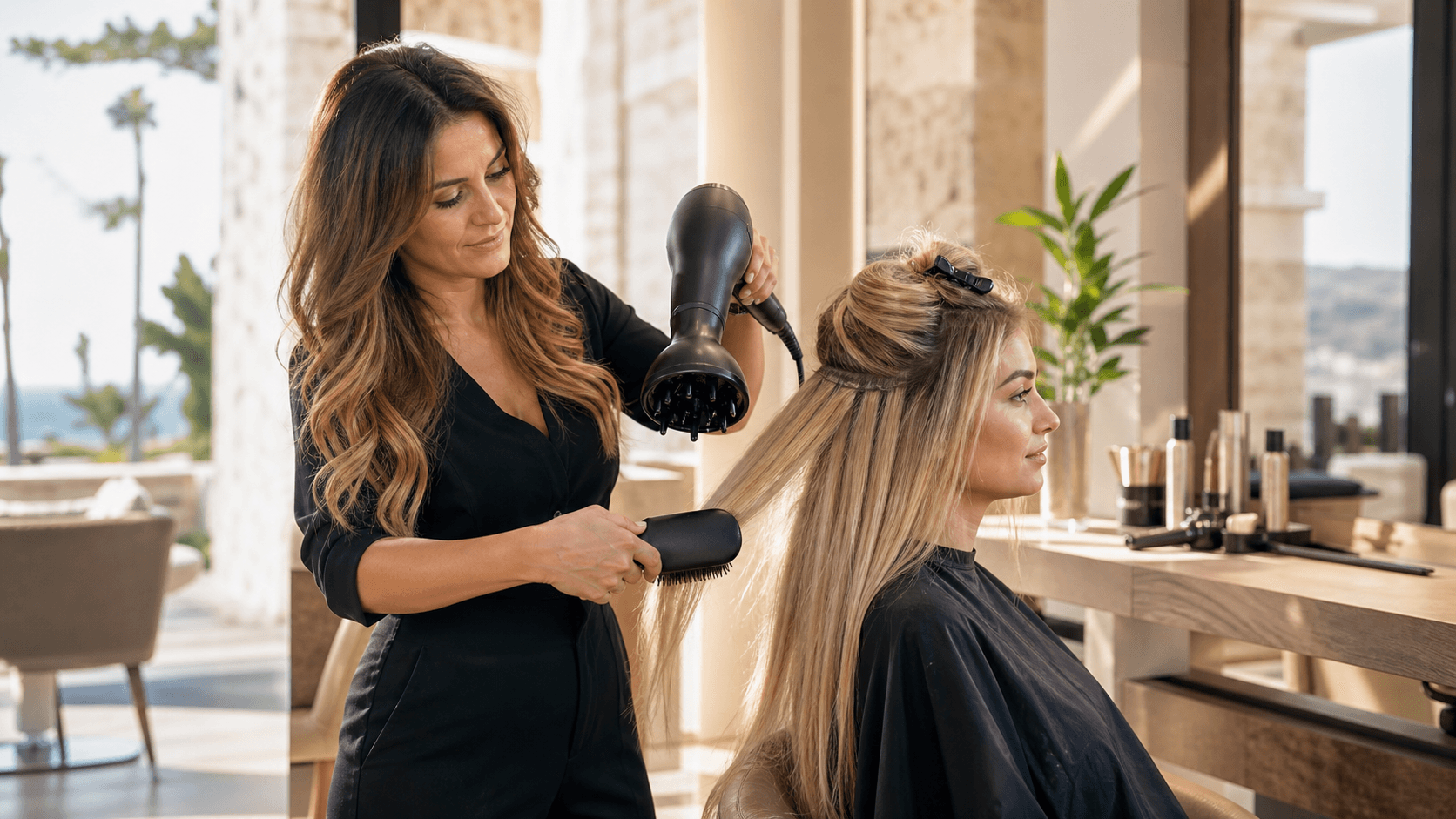
Good dryer technique includes:
- Keeping the nozzle on for focused airflow
- Aiming the air down the hair shaft to smooth the cuticle
- Holding the dryer a safe distance from the bonds or tapes
- Using the round brush to create tension through the lengths, not at the root
For many clients, a medium to high heat with strong airflow on the lengths, and slightly lower heat around the root area, gives a sleek finish without stress on the attachments. A cool shot at the end helps set the shape and shine, which is especially useful when you are stepping back into Paphos warmth and mild humidity.
How a Salon Blow Dry in Paphos Protects Your Extensions
Booking a professional blow dry in Paphos when you wear extensions is about far more than a one-day style. It is a way to protect your investment and keep both your natural hair and extensions in better condition over time.
Regular professional finishes can help with:
- Longer-lasting smoothness and shape
- Fewer tangles around attachment points
- Lower risk of slippage from rough handling or wrong products
- Early spotting of any bonds or tapes that may need attention
At Helen Charles Salon, the experience is calm and considered. You are greeted into an elegant, clean space, then we talk through your hair, colour, lifestyle, and how you wear your extensions day to day. Because we work with both colour and extensions, we look at the whole picture, not separate pieces, so your finished blow dry feels cohesive and polished.
We also share simple aftercare guidance, such as:
- How often to come in for a professional blow dry
- What to avoid between appointments, like tight bobbles or sleeping on wet hair
- Gentle night-time habits, such as loose braids or silk pillowcases, to keep everything smoother
Many people worry about damage, discomfort, or extensions looking obvious. When technique, sectioning, products, and heat are all handled with care, the result should feel light, glossy, and very natural. As we move through autumn into a more event-filled part of the calendar, thoughtful, regular blow dries become part of a longer-term care plan, not just an occasional treat.
Refresh Your Look With A Salon-Perfect Finish
Experience a tailored blow dry in Paphos at Helen Charles Salon, where we focus on enhancing your natural style with beautiful, lasting results. Whether you are preparing for a special occasion or simply want to feel more polished, we will create a finish that suits your hair, routine and personality. Ready to book or ask a question about your appointment options? Simply contact us and we will be happy to help.